Išsitrauk ausines iš ausų ir nenustodamas eiti klausyk.
Žingsnis po žingsnio ir miesto triukšmas po truputį tyla.
Ar girdi kas lieka? Tai tavo minčių balsas. Tai tu.
Surask laiko išklausyti save.


 Architektūros studentai jaučiasi žymiai pranašesni už psichologijos studentus. Ir ne veltui. Čia vaizdas iš architektūros fakulteto studentų kavinės. Pastatas apačioje, psichologijos fakultetas.
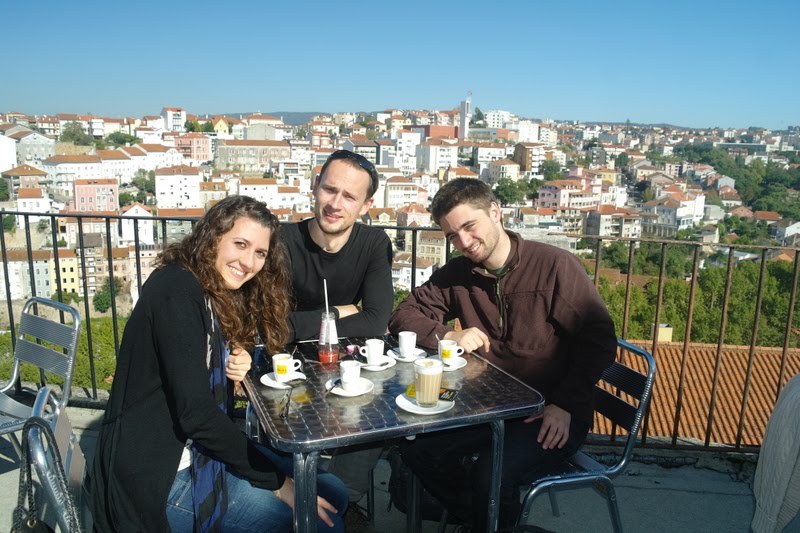
 O čia vaizdas iš tos pačios studentų architektų kavinės. Aš ir mano nauji draugai portugalijos medicinos ateitis. Jei jie gydo žmones taip pat gerai kaip jie linksminasi, aš noriu sirgti Portugalijoje.
 Anarchijos zona. Visas senamiestis išmargintas užrašais ant sienų ir dažnai visi labai prieš kapitalizmą nusistatę. Anarchistai socialistai. Politiškai nusiteikęs jaunimas Coimbroje. Gal būt dėl to, kad universitetas erezijų visokių juos primokina.
 Gražus piešinėlis ant psichologijos fakulteto sienos. Užrašas byloja "Open your mind". Manau jie to ir nori iš visų. Atsiverkite ir būkite laimingi.
 "Amar Portugal". Aš irgi myliu Portugaliją. Ir Coimbrą, nors šitas šešėlis nebuvo linksmas, bet Coimbra ilgai prisiminsiu.
 "There is no spoon". Kitaip sakant turi suprasti, kad šio šaukštelio nėra ir tik tada jis išsitiesins. Ar susilankstys. Nežinau. Radau jį šukuodamas Coimbros gatves. Tar vienas žymeklis, kad prisiminimai neišdiltų.
 Senoji Coimbros katedra (nr 2) Ir viena iš nedaugėlio nuotraukų, kur ne aš pats save fotografuoju. Turistė brazilė aplinkui slampinėjo ir suoliukus fotografavo. Papliurpėm apie nieką. Bepigu brazilams portugalijoje. Nereikia kalbos mokintis.
 Laidojimo namai. Minimalizmas. Siena dangus ir varpinė.
 O saulės tikrai netrūko. Oras pasitaikė neįprastai geras. Net vietiniai neprisimena, kada tokiu metu toks oras yra buvęs. Pagal kainas jau visur buvo nesezonas, bet pagal orą buvo vasaros vidurys. Galiu pradėti įtarti, kad Portugalija ruošėsi mano atvykimui, nes tokio oro kitaip kaip tik "užsakytu" nepavadinsi.
Dar anksti namo, blaiviai pagalvokKą pasakysi staiga sugrįžęs.Ar pasveikai, Ar sužinojai kas buvo teisusAr dabar pripažįsti, kad tiesą tau sakė seni kalendoriaiDar anksti namo, dar anksti.
Tai, parašai ir priima? Taip.Visame pasaulyje? Taip.Bet tu nepažįsti to žmogaus? Nu ne.Nu tai apvogs, apgaus arba nužudys. Manau taip ir bus.
So never refuse an invitation, never resist the unfamiliar, never fail to be polite and never outstay the welcome. Just keep your mind open and suck in the experience.
And me, I still believe in paradise. But now at least I know it's not some place you can look for, 'cause it's not where you go. It's how you feel for a moment in your life when you're a part of something, and if you find that moment... it lasts forever...Aišku "paradise" gal per stiprus žodis, bet kaip sako, žodžių iš citatos neišimsi. Taigi, visiems norintiems keliauti, labai rekomenduoju pabandyti. Ir jei patiks, praneškite man. Couchsurfing'e aš atrodau va taip.

I hate stupid people. I see blatant displays of irrationality so often that I don't even think about it anymore. One day, I read about a man in Chicago who sued White Castle because he burned himself on an onion ring, which he claimed was unreasonably dangerous. As though there is a reasonable level of danger that one can expect from onion rings and this one exceeded the Onion Ring Danger Threshold. That did it. I decided to collect the stupidity I encounter, and the blog was born.Ir šiame bloge yra vienas įrašas būtent apie mobiliuosius ir jų grėsmę. Trumpai sakant, yra penkios kategorijos:

"Panaudokime dar kokį modernų trumpinį. Taip turėtu atrodyti kiečiau. A2DP."

"Sugalvok norą ir aš tau jį išpildysiu."
"Kai norėsi, kad rytdiena ateitų greičiau, išvyniok kelias vijas ir vakaras taps rytu. Kad jis bus protingesnis nepažadu, bet rytojus ateis nelaukiant."
“It’s always a matter of controlling risk,” he explained. “Risky things are not in themselves risky if you understand them and control them. If you do it randomly and you are sloppy about it, it can be very risky.” The key to success, he said, is figuring out “Where is the edge? And how do I stay the right distance from the edge?"O viena iš nuorodų mane dar labiau sudomino.
Before our meeting, he sent me a copy of his “Principles,” a hundred-page text that is required reading for Bridgewater’s new hires. It turned out to be partly a self-help book, partly a management manual, and partly a treatise on the principles of natural selection as they apply to business.
Sometimes we forge our own principles and sometimes we accept others’ principles, or holistic packages of principles, such as religion and legal systems. While it isn’t necessarily a bad thing to use others’ principles—it’s difficult to come up with your own, and often much wisdom has gone into those already created.
Adopting pre-packaged principles without much thought exposes you to the risk of inconsistency with your true values.
Your values are what you consider important, literally what you “value.” Principles are what allow you to live a life consistent with those values. Principles connect your values to your actions; they are beacons that guide your actions, and help you successfully deal with the laws of reality. It is to your principles that you turn when you face hard choices.


 Pranešimai
Visi komentarai
Pranešimai
Visi komentarai


